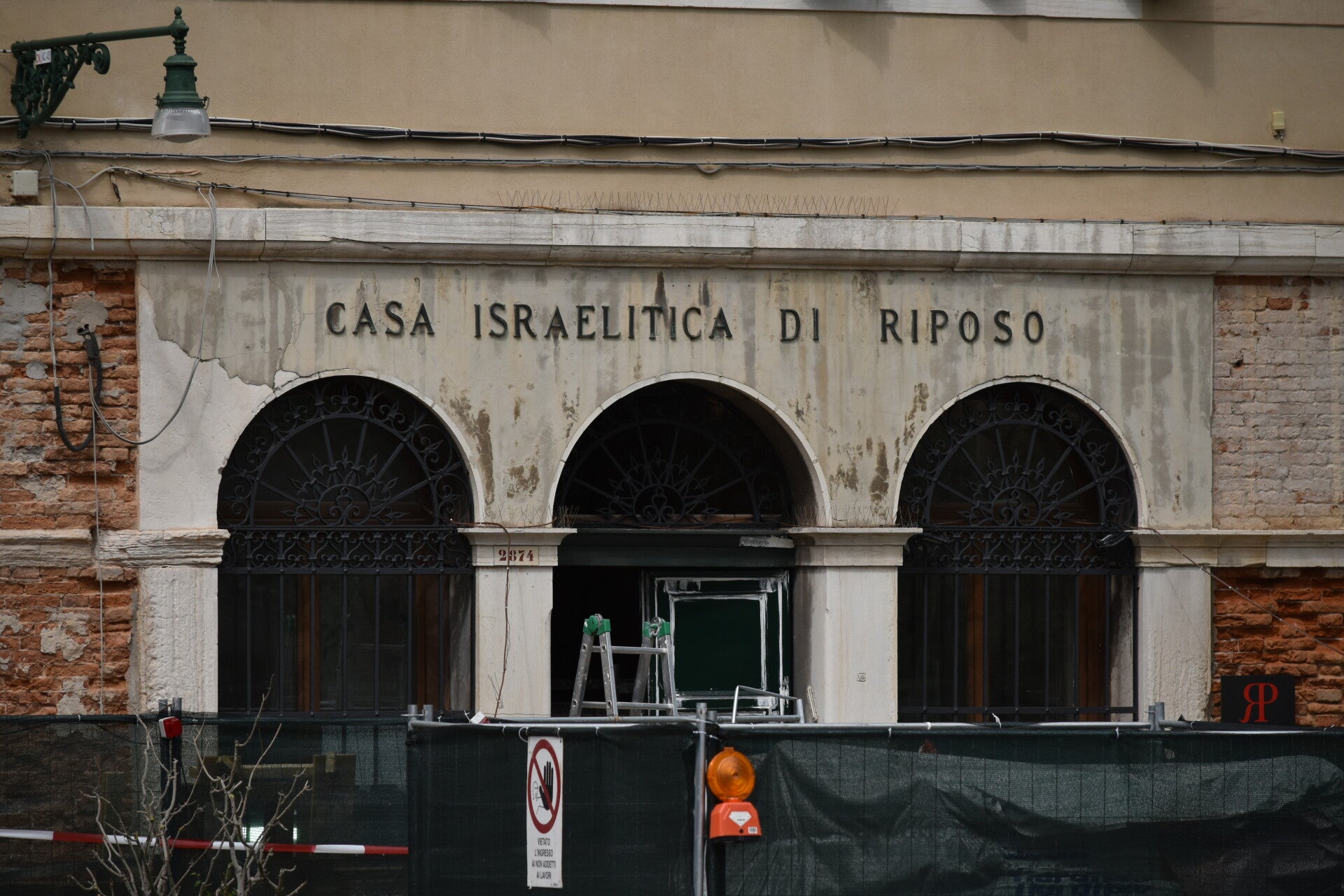
A Resilient History
The history of the Venetian Ghetto demonstrates that enforced isolation did not extinguish Jewish life but rechanneled it into forms of resilience and cultural expression that outlasted the ghetto itself.
"The big problem with Venice is that once, Venice was a commercial, entrepreneurial center, so they also came from outside, and both Jews and non-Jews were attracted. Now Venice has become simply a tourist center, an empty shell."
Raffaele Campos
"There were more of us, as the Venetian population is decreasing more and more; the Venetian Jewish population is also decreasing more and more because Venice is a city that, from the point of view of work, perhaps even as a perk, despite everything, it does not offer much."
Manuela Fano
"Let's say modernity, right? It changes. Venice has changed. So now it's like that. Of course, it is nice, for example, that the museum has been restored; that is, the community is becoming more modern, even richer, more attentive to certain things. "
Lia Tagliacozzo
Historical Records
The Venetian Ghetto was established in 1516 by decree of the Venetian Republic. It was the first officially mandated Jewish ghetto in the world. Jews were confined to a small, walled area with curfews and surveillance, but they created a vibrant center for scholarship and creativity. Census data as far back as 1210 show population fluctuations corresponding to periods of persecution and acceptance, revealing the ghetto's adaptive strategies. Multiple synagogues were built and are still standing today. A strong printing culture developed (including early prints of Hebrew texts that are held within the five synagogues in the Ghetto). The ghetto formally dissolved in 1797 with Napoleon’s conquest of Venice, but its cultural and historical legacy remains deeply significant. The term “ghetto” originated from here and has since been globally adopted.
ADEI Women’s Organization
The Jewish community can count on the help of an active chapter of ADEI-Associazione Donne Ebree italiane, a national organization founded in Milan in 1927. One of their activities is the continued observance of “Tea at Five,” a moment for fellowship and cultural growth. I was privileged to be invited there. The story of the early years of this organization is told by Lia Tagliacozzo in her book Le signore del thè delle cinque: i primi anni dell'ADEI a Venezia (1928-1945) tra tzedaká e cultura ebraica (Venezia: Cetid, 2012).
Many ADEI members are now based in Venice and spend significant time in the ghetto. This group of women makes many modern efforts to preserve the ghetto (museum and heritage projects) to underscore the continuing relevance of this history. Many of the women I interviewed I met at an ADEI event. If not for their efforts, the Jewish Venetian community would be in grave danger of dying out.
Cultural Artifacts & Traditions
Interviewees shared traditions and rituals from the ghetto. There is a kosher bakery shop in the ghetto that serves unique Venetian treats and special recipes that originated from the ghetto. “Venetian women make typical sweets for Easter, for Pesah. That is a typical Venetian thing," said Raffaelle Campos. The community also hosts plays for the festivities and special events organized by the ADEI. There are also many cultural artifacts in the ghetto, such as the architectural features of synagogues (still standing today). Printed materials from the ghetto’s Hebrew presses offer evidence of vibrant cultural life and ancient books are held within the five synagogues in the Ghetto.
Current Challenges
Mass tourism has been devastating for the Venetians who call the floating city their home. The Jewish community is also in decline due to the fact that the city has been very slow to modernize, which has, in turn, caused a large number of the youth to leave the city. Tourism has driven up property values, pushing residents out and weakening community life. This issue has become the biggest threat to this community. Even with all of these threats, the community stays strong. Recording these stories now is key to cultural survival.
Another issue the community is now facing is the recent arrival of the American Chabad which has changed the internal dynamics and has become yet another reason for adjustment.
The Modern Ghetto
The modern-day Venetian Ghetto is located in the Cannaregio district of Venice. It remains a powerful symbol of Jewish history, culture, and endurance. Though it is no longer a segregated space, it still houses synagogues, a Jewish museum, and a small but active Jewish community. Despite centuries of persecution, war, and depopulation, the Ghetto has preserved its cultural legacy and traditions. Its resilience lies in its ability to transform from a place of confinement into a vibrant testament to survival, memory, and identity.
Sources
Calabi, Donatella and Lenore Rosenberg. Venice and Its Jews: 500 Years since the Founding of the Ghetto. Officina Libraria, 2017.
Calimani, Riccardo and Katherine Silberblatt Wolfthal. The Ghetto of Venice. Oscar Mondadori, 2005.
Camarda, Chiara, et al. The Venice Ghetto: A Memory Space That Travels. U of Massachusetts P, 2022.
Campos, Marina, et al. Mi racconti nonno? Mi racconti nonna?: I Bambini Del Talmud Torà di Venezia chiedono ai loro nonni come si sono salvati, 1938-1945. Brill Scheuer Foundation, 1998.
Curiel, Roberta, et al. The Venetian Ghetto. Rizzoli, 1990.
Author.. Li hanno portati via. ....., 2012.
Fortis, Umberto. The Ghetto on the Lagoon: A Guide to the History and Art of the Venetian Ghetto (1516-1797). Storti Edizioni, 2001.1998.
Tagliacozzo, Lia. Le signore del Tè delle cinque. Cetid, 2012.